
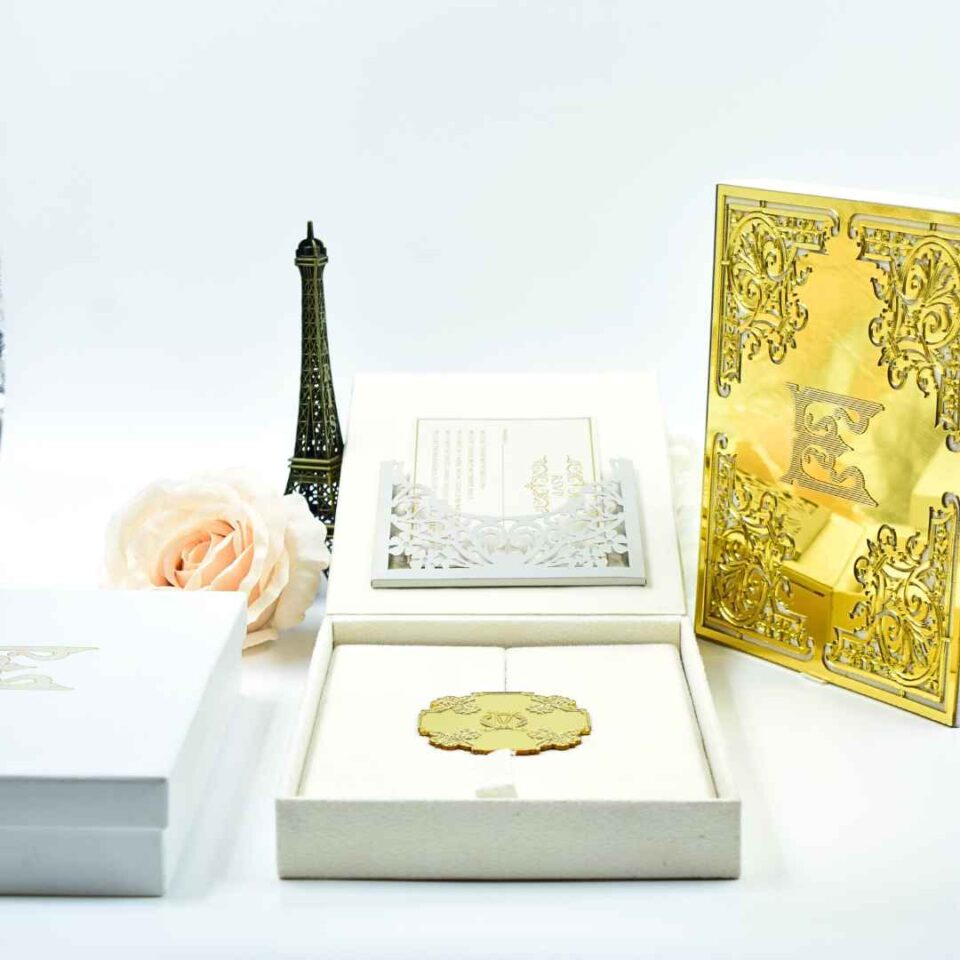
How to Design Wedding Cards with Box That Match Your Wedding Aesthetic
Designing wedding invitations is no longer about picking something pretty and moving on. It is about alignment. Your invitation is the first physical expression of your wedding aesthetic. Before guests see your venue, your outfits, or your décor, they meet your stationery. That first impression matters more than most couples realize.
This is where wedding cards with a box come in. They offer structure, storytelling, and a level of intention that single-card invitations simply cannot. But here is the catch. A box alone does not guarantee elegance. A mismatched box can actually confuse the aesthetic rather than elevate it.
The real magic happens when luxury wedding invitation cards and their boxes feel like they belong together and, more importantly, belong to your wedding.
Let’s break down how to design wedding cards with a box in a way that feels cohesive, stylish, and deeply intentional.
Start with Your Wedding Aesthetic, Not the Invitation
This is where most people go wrong.
They fall in love with an invitation design first and then try to force the rest of the wedding to match. That approach almost always leads to compromises.
Instead, get clear on your wedding aesthetic before you touch stationery.
Ask yourself:
- Is your wedding modern or romantic?
- Minimal or layered?
- Formal or relaxed?
- City, destination, or nature-driven?
Your aesthetic is not a Pinterest board. It is a feeling. Once you understand that feeling, designing wedding invitation box becomes far easier and far more satisfying.
Understand What the Box Represents
A box is not just packaging. It is part of the design language.
In the world of luxury wedding invitation cards, the box acts as a frame. It tells your guests how to approach what is inside. A sleek box suggests modernity. A soft fabric-wrapped box suggests intimacy. A bold, structured box suggests confidence.
Before choosing the color palette or materials, decide what role the box plays in your story.
Is it meant to:
- Feel dramatic and impactful?
- Feel calm and refined?
- Feel warm and personal?
Once you answer that, design decisions start to fall into place naturally.
Match Materials to Your Aesthetic
Material choice is where alignment truly begins.
For modern and minimalist weddings, structured, rigid boxes with clean edges work best. Think matte finishes, neutral tones, and subtle textures.
For romantic or classic weddings, softer materials like velvet, linen, or fabric wraps create warmth and depth.
For destination or nature-inspired weddings, handmade paper boxes, textured surfaces, or organic finishes feel more authentic.
The key is consistency. Your wedding cards, along with the box, should feel like they come from the same world as your décor, outfits, and venue.
Luxury does not come from expensive materials. It comes from thoughtful ones.
Design the Invitation First, Then Build the Box Around It
Here is an industry secret that makes everything easier.
Design the main invitation first.
Your luxury wedding invitation cards should define the tone. Font choices, layout style, spacing, and finishes all matter. Once that design feels complete, the box becomes a supporting element rather than a competing one.
A common mistake is choosing an ornate box and then struggling to design an invitation that can live up to it. When the invitation leads, and the box follows, the result always feels more cohesive.
Keep the Colour Palette Tight
A strong aesthetic does not need many colours.
Most elevated wedding cards with box designs rely on two to three tones at most. This includes the box, the invitation cards, and any inserts.
Neutral palettes feel timeless. Bold palettes feel intentional when used sparingly. Pastels feel refined when softened.
Avoid introducing new colours just because they are trendy. If it does not exist elsewhere in your wedding, it does not need to exist in your stationery.
Think in Layers, Not Pieces
Designing boxed invitations is about layers, not individual items.
The outer box is the first layer.
The inner lining or wrap is the second.
The main invitation is the third.
Supporting cards are the fourth.
Each layer should feel connected to the next.
Luxury wedding invitation cards feel elevated when the transition from box to card feels seamless. No visual shock. No sudden change in style. Just a smooth progression that feels intentional.
Choose Typography That Reflects the Mood
Typography is one of the most powerful tools in wedding stationery design.
For modern aesthetics, clean serif or sans-serif fonts work beautifully. They feel confident and editorial.
For romantic aesthetics, flowing scripts paired with structured fonts create balance.
For classic aesthetics, traditional serif fonts with thoughtful spacing are always a reliable choice.
Whatever you choose, keep it consistent across all elements inside the box. Consistency is what makes wedding cards with a box feel designed rather than assembled.
Use Inserts Strategically
Boxes invite the temptation to add more. Resist it.
Luxury does not mean filling every inch of space. It means knowing when to stop.
Include only what adds value:
- A details card
- A schedule or itinerary
- A small symbolic element
Too many inserts dilute the impact of your main invitation. The best luxury wedding invitation cards remain the star, even inside a box.
Add One Thoughtful Detail, Not Five Decorative Ones
To elevate your design, add a detail that feels meaningful.
This could be:
- A wax seal
- Amonogram card
- A fabric ribbon
- A pressed floral element
One strong detail feels intentional. Multiple decorative touches feel busy.
Your wedding cards with box should feel calm, not crowded.
Make Sure the Box Enhances, Not Hides
A box should frame your invitation, not overshadow it.
If guests remember the box but not the invitation, the balance is off.
The goal is harmony. When someone opens your wedding invitation, everything should feel like it belongs together. No part should compete for attention.
This is especially important with luxury wedding invitation cards, where design restraint is what creates impact.
Consider the Guest Experience
Design is not just visual. It is experiential.
Think about:
- How the box opens
- How the cards are revealed
- How easy it is to remove and hold the invitation
A smooth experience reinforces the feeling of quality. Awkward openings or overly tight layouts break the moment.
A good boxed wedding card design feels effortless to the guest, even if a lot of thought went into it.
Balance Trend Awareness with Timelessness
Trends are helpful, but they should never lead.
In 2026, couples are leaning toward:
- Softer color palettes
- Structured minimal boxes
- Tactile materials
- Clean typography
You can absolutely take inspiration from these trends, but always filter them through your own aesthetic. Luxury wedding invitation cards age well when they are rooted in intention rather than trend-chasing.
Think About How It Fits Into the Bigger Wedding Story
Your invitation is one chapter, not the whole book. Your wedding cards with box should connect visually to:
- Your save-the-dates
- Your wedding signage
- Your menus and place cards
That visual continuity creates a strong, polished wedding identity.
When everything feels connected, guests notice, even if they cannot explain why.
Final Thoughts
Designing wedding cards with a box that matches your wedding aesthetic is not about following rules; it’s about creating a cohesive look. It is about making choices that feel aligned.
When luxury wedding invitation cards and their boxes speak the same design language, the result feels effortless, elevated, and memorable.
A box does not make an invitation luxurious on its own. Thoughtfulness does.
Start with your aesthetic. Lead with intention. Choose quality over quantity. When you do, your boxed wedding cards become more than stationery. They become the first expression of your celebration, done right.
Duallush Designs has a nice collection of boxed wedding invitation cards. Before deciding, ensure you wedding venue, wedding theme, and wedding card with the box all align in symmetry.
