
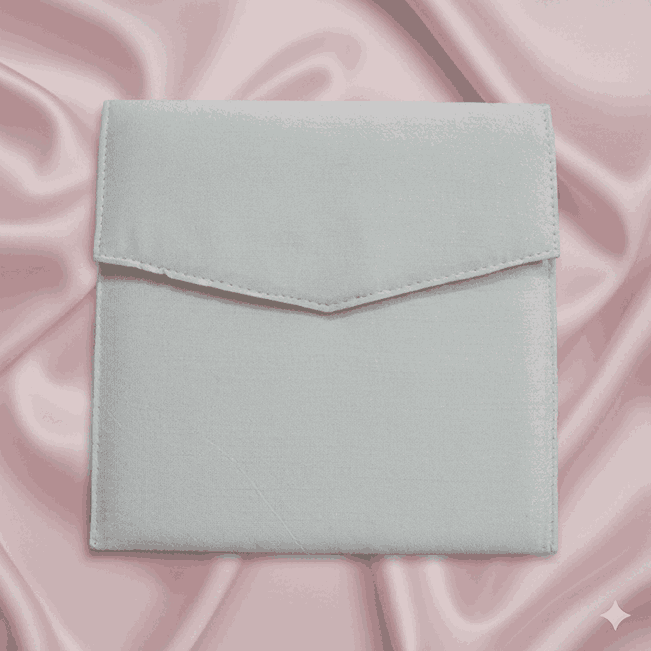
Ask a wedding planner which invitation format causes the fewest problems on their end, and pocket invitations come up again and again. It’s not the flashiest answer pockets don’t have the immediate “wow” of a boxed suite or the architectural drama of acrylic but for planners managing dozens of moving pieces across a wedding’s stationery, function matters as much as flash. Here’s why this format has quietly become a planner favorite, and how it’s evolved for 2026.
What a Pocket Invitation Actually Is
A pocket invitation is built around a folded or die-cut outer card with an interior pocket that holds the main invitation along with additional inserts RSVP card, details card, accommodations information all slid into a single unit rather than left loose inside an envelope. The pocket itself can open like a simple fold-out flap, or in more elevated 2026 versions, unfold dramatically like a pair of doors or slide apart like theater curtains to reveal what’s inside.
Why Planners Specifically Gravitate Toward This Format
It solves a real organizational problem. Multi-piece suites invitation, RSVP, details card, sometimes a map or hotel block information are genuinely hard to keep together as loose pieces. A pocket format holds everything in a fixed, intentional order, which matters enormously when a planner is coordinating assembly and mailing for a large guest list. Loose inserts shifting inside envelopes is a small but real source of assembly headaches; pockets remove that variable almost entirely.
It scales well across large guest lists. Planners working with sizable invitation counts need a format that’s efficient to assemble consistently across every single suite. A pocket structure, once designed, repeats reliably every guest receives the identical, correctly ordered set of inserts, which is harder to guarantee with loose-card assembly at volume.
It protects delicate inserts during mailing. A pocket keeps enclosure cards contained and less prone to bending or slipping during transit, which matters more than it might seem a creased RSVP card or a details card that’s gone missing from an envelope creates real problems for a planner trying to finalize a guest’s information.
It’s become genuinely elevated, not just practical. For a stretch, pocket invitations were seen as a purely functional, slightly dated format. That’s changed. Designers are now treating the pocket itself as a design opportunity a bold color pocket, a foil-lined interior, or a reveal mechanism that unfolds dramatically rather than simply flipping open. Planners have taken notice, since it means they can recommend a format that’s both easy to manage and visually current.
The 2026 Pocket Invitation, Reimagined
This year’s pocket designs go well beyond a basic folder. A few directions gaining real traction:
- Bold color pockets a deep berry, emerald, or navy interior pocket paired with a neutral or foil-printed outer card, creating a genuine color moment the instant it’s opened.
- Reveal-style mechanics pockets that open like French doors or slide apart like curtains, turning what used to be a purely functional fold into an actual unboxing moment.
- Textural pairings a linen or velvet exterior wrapped around a pocket structure, combining the tactile richness of premium material with the practical benefit of the format underneath.
- Windowed pockets a die-cut window on the outer fold that lets a glimpse of the invitation design peek through before the pocket is fully opened, adding a small moment of anticipation.
Pocket vs. Folio vs. Box: Where It Fits
Planners often weigh pocket invitations against two other layered formats, and it’s worth knowing the real distinction. A folio invitation is a fabric or leather wraparound cover that opens like a small book more of a design statement than a purely functional holder. An invitation box is a rigid, lidded container built for maximum unboxing drama. A pocket invitation sits between the two: more structured and design-forward than a plain envelope, but lighter, flatter, and less expensive to mail than a full box which is exactly why it remains the practical middle ground planners reach for on large guest lists where a box for every guest isn’t realistic.
When to Recommend Pockets vs. Other Formats
Pocket invitations tend to be the right call when:
- The guest list is large, and assembly efficiency genuinely matters
- The suite has several inserts that need to stay together and in order
- Mailing cost and weight are a real consideration, since pockets are lighter than boxed suites
- The couple wants a design-forward format without the higher cost of a fully boxed presentation
They’re less necessary when a suite is genuinely simple a single card with no additional inserts doesn’t need a pocket to stay organized, and a flat card or acrylic invitation may communicate the design intent more directly.
The Bottom Line for Planners and Couples
Pocket invitations have earned their reputation the practical way by consistently solving the assembly, protection, and mailing problems that come with any multi-piece suite, while now catching up aesthetically to match 2026’s more design-forward expectations. For planners managing dozens of moving stationery pieces across a wedding, that combination of reliability and current design is exactly why the format keeps earning a recommendation.
Curious whether a pocket format fits your suite and guest count?
Get a free design consultation with our team, and we’ll help you choose the structure pocket, folio, or box that fits your wedding’s scale and style.