For generations, cardstock was simply the default. Every invitation, from the simplest to the most elaborate, started with the same basic question: which paper? In 2026, a growing number of modern couples are skipping that question altogether and reaching for something entirely different acrylic. Here’s a real, practical look at why clear is winning out over cardstock for so many contemporary weddings, and what that trade-off actually involves.
The Fundamental Difference
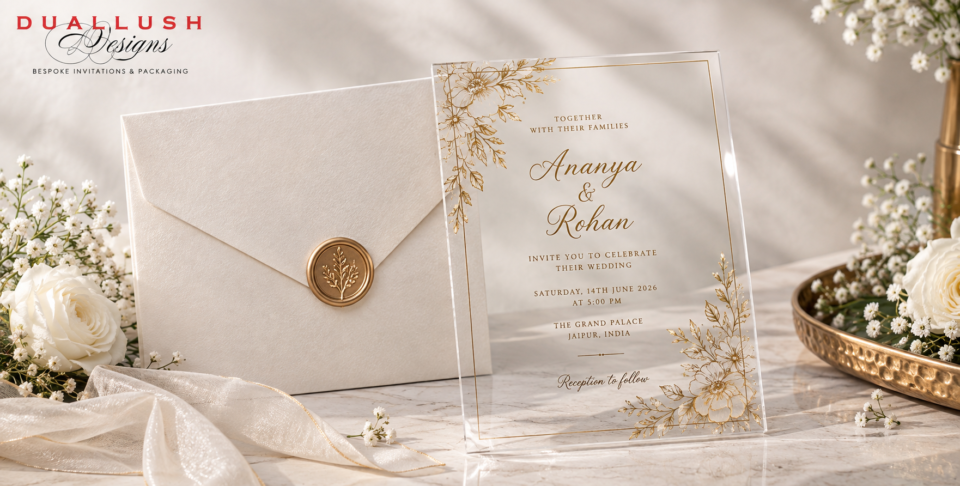
Cardstock is, at its core, a surface everything about the invitation’s design sits on top of it. Acrylic works differently: because it’s transparent or semi-transparent, the material itself becomes part of the visual statement. Text and design elements appear to float rather than rest on a page, which gives even the simplest layout a modern, architectural quality that no amount of paper texture or printing technique can fully replicate.
That’s the root of acrylic’s appeal for modern couples specifically it’s not competing with cardstock on the same terms. It’s offering something cardstock structurally can’t.
Why Cardstock Still Makes Sense for Many Weddings
Before making the case for acrylic, it’s worth being fair to cardstock, because it remains the right choice for a large share of weddings. Heavyweight cardstock generally 80 to 110 lb cover stock, or around 300 GSM for the sturdiest options offers real advantages: it’s more affordable, supports a much wider range of printing techniques (letterpress, foil stamping, deep embossing), folds and layers easily for pocket-style suites, and comes in an enormous range of colors and textures. If your wedding leans romantic, vintage, or classically elegant, cardstock’s warmth and versatility often suit that aesthetic better than acrylic’s cooler, more architectural feel ever could.
Why Modern Couples Are Choosing Acrylic Anyway
It signals “modern” instantly, without extra design work. Where a cardstock invitation needs color, illustration, or texture to communicate a contemporary aesthetic, acrylic does that work simply by being what it is. A clean typographic layout on clear acrylic reads as intentional and current the moment it’s seen no additional styling required.
It photographs and films differently than anything else in the category. Acrylic’s reflective, transparent quality interacts with light and surroundings in a way flat cardstock can’t, which matters enormously for couples building wedding content for social media. The same invitation produces a different image depending on the surface it’s photographed against something no amount of paper texture can offer.
It’s genuinely more durable for the months guests hold onto it. Rigid acrylic resists bending, creasing, and moisture damage far better than paper, which matters given that most guests keep their invitation on a countertop or bulletin board for weeks or months before the wedding actually happens.
It suits the “quiet luxury” aesthetic dominating 2026. As restrained, minimalist design has taken over from busier, more decorated stationery styles, acrylic’s inherently clean look fits that mood directly it doesn’t need embellishment to communicate quality the way a plainer cardstock invitation might.
What You’re Trading Away by Choosing Acrylic
The honest picture includes real trade-offs, not just upside:
Higher cost. Acrylic requires custom laser-cutting and specialized UV printing rather than standard offset or digital printing, which puts it meaningfully above most cardstock options on price per piece.
Longer production time. Where a cardstock suite might be ready in 4 to 6 weeks, acrylic typically needs 8 to 10 weeks due to the cutting and printing process involved a real planning consideration if your timeline is tight.
Limited technique compatibility. Letterpress, deep embossing, and some foil techniques that work beautifully on cardstock simply aren’t compatible with acrylic’s rigid, non-porous surface. If those specific finishing touches matter to you, cardstock remains the better base material.
Shipping and handling considerations. Acrylic is heavier and can chip if handled roughly, requiring a rigid mailer and, often, higher postage than a standard paper envelope.
Where the Two Materials Can Meet in the Middle
Increasingly, couples aren’t choosing exclusively between the two they’re combining them. A velvet invitation box paired with an acrylic invitation card inside gives a suite acrylic’s sleek, modern reveal alongside a softer, more traditional exterior presentation. Others use cardstock for supporting pieces RSVP cards, details cards while reserving acrylic specifically for the main invitation, balancing cost and design impact rather than committing fully to one material across the entire suite.
How to Actually Decide
The right choice comes down less to which material is more fashionable and more to which one matches your wedding’s actual visual language. A few practical questions to ask yourself:
- Is your wedding’s overall aesthetic modern and minimalist, or romantic and traditional?
- Does your budget comfortably support acrylic’s higher per-piece cost, or does cardstock’s flexibility and range of price points fit better?
- Do you have enough lead time in your planning for acrylic’s longer production window?
- Are there specific finishing techniques letterpress, deep embossing you’re set on, that only cardstock can deliver?
If your honest answers point toward modern, budget-flexible, and timeline-comfortable, acrylic is very likely worth the investment. If they point toward traditional, cost-conscious, or tight on time, cardstock remains a completely valid and in many cases, better choice.
Still weighing acrylic against cardstock for your own suite?
Get a free design consultation with our team, and we’ll help you decide based on your wedding’s style, budget, and timeline not just what’s trending.