Velvet gets most of the attention in fabric-based wedding stationery, but a quieter, equally significant trend has been building alongside it: silk. Where velvet signals richness through density and weight, silk signals luxury through softness, sheen, and movement, a genuinely different sensory register that’s earning it a growing place in 2026’s most considered invitation suites.
What Makes Silk Different From Other Luxury Materials
Every fabric used in wedding stationery communicates something distinct. Velvet is plush and matte, absorbing light into deep, saturated colour. Silk does the opposite: it has a natural sheen that catches and reflects light as it moves, giving it a subtle shimmer no other material in this category replicates. That reflective quality, combined with silk’s characteristic drape and lightness, gives invitations and folios built around it a softer, more fluid feel than the structured richness of velvet.
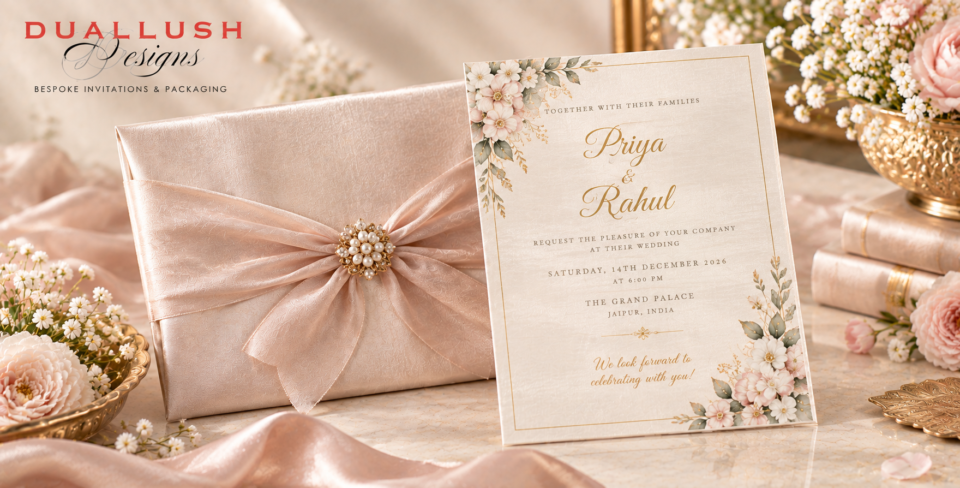
This is why silk tends to show up in stationery in a different way than velvet does. Rather than wrapping a rigid box exterior, silk is more often used for ribbons, envelope liners, and folio covers, applications where its natural movement and light-catching quality can actually be seen and felt.
Where Silk Shows Up in 2026 Stationery
Silk folios. A silk folio wraps the invitation suite in a soft, fluid cover that opens like a small book, giving guests a gentler unboxing moment than a rigid box delivers. It’s become a favourite for couples who want fabric-level luxury without velvet’s heavier, more structured presence.
Silk ribbons and ties. Hand-dyed silk ribbon has become one of the most requested finishing details in luxury suites this year, used to bind a folded invitation, secure a belly band, or tie together a layered, multi-piece suite. A thin strip of silk can transform an otherwise simple card into something that feels genuinely tactile the moment it’s picked up.
Envelope liners. A silk or silk-effect liner adds a quiet moment of surprise as an envelope is opened, echoing the shimmer and softness carried through the rest of the suite without requiring silk across the entire piece.
Accent pairings. Silk is increasingly used to soften a bolder base material rather than standing entirely on its own, a silk ribbon tying together a deep chocolate or jewel-toned invitation, for instance, adding lightness and contrast against a heavier color palette.
A Material With Real Cultural Weight
Silk’s association with luxury and ceremony runs deeper than a single wedding season. It has long held a central place in South Asian bridal tradition specifically, silk sarees and dupattas are core to countless wedding ceremonies, which is part of why silk translates so naturally into stationery for these celebrations. A trousseau packaging system that incorporates silk elements alongside velvet or structured boxes can echo that same textile tradition throughout a couple’s full wedding presentation, not just the invitation itself.
What to Look for in Quality Silk Stationery
Not all “silk” stationery is created equal, and a few genuine quality markers are worth knowing before you order.
Weight and drape. True silk has a distinctive weight and fluid drape that lower-quality synthetic alternatives can’t fully replicate. If you’re choosing between silk and a faux-silk alternative, ask specifically which one you’re getting and request a swatch, since the two can look similar in photos but feel noticeably different in hand.
Sheen without stiffness. Genuine silk holds its characteristic shimmer while still moving softly. A liner or ribbon that looks shiny but feels stiff or plastic-like is a sign of a lower-quality synthetic substitute rather than real silk.
Consistent dye saturation. Because silk takes dye differently than paper or cardstock, color consistency across a full order matters more than it might with a printed material. Ask your stationer how dye lots are matched across a larger quantity, especially for a specific custom color.
Pairing Silk With Other Materials
Silk rarely needs to carry an entire suite alone, and some of the most effective 2026 designs use it specifically as a contrast material. Pairing a silk ribbon or liner with a rigid, modern material like acrylic balances softness against structure in a single suite. Pairing it with velvet, a silk ribbon tied around a velvet box, for instance, layers two different fabric sensations together without either one competing for attention.
Is Silk Right for Your Wedding?
Silk suits weddings built around softness, romance, and movement rather than architectural structure or bold, deep color alone. If your wedding’s overall aesthetic leans toward flowing fabrics, soft color transitions, and a gentler emotional register than velvet’s dramatic richness, silk is likely to feel more aligned with your day than a heavier material would. It’s also a natural fit for any celebration where silk already carries genuine cultural or personal significance, since the material choice becomes part of the story rather than just a design decision.
Curious whether silk fits your invitation suite?
Get a free design consultation with our team, and we’ll help you choose the right silk pairing, pieces, and finish for your wedding’s exact style.