Your wedding invitation lands in a guest’s hands months before they ever see your venue, taste your cake, or hear your first dance song. It’s the first real “moment” of your wedding and in 2026, couples are treating it that way.
This year’s invitation trends fall into three honest categories: the ones worth genuinely investing in, the ones that are easy wins regardless of budget, and the ones we’d quietly steer you away from. Below, we break down all of it including the real numbers (cost, timing, shipping) most trend round-ups leave out.
1. Sculptural Die-Cut Shapes Are Replacing the Rectangle
The biggest visual shift in 2026 isn’t a color or a material it’s the shape of the card itself. Arches, soft curves, pebble silhouettes, and scalloped edges are showing up everywhere, replacing the standard rectangle that’s defined wedding stationery for decades.
Why it’s working: a die-cut shape gives an invitation a sense of object-ness it feels designed, not just printed. An arch in particular reads as both classic (think chapel doorways) and architecturally modern at the same time, which is probably why it’s the shape most design studios can’t stop using this year.
The honest trade-off: custom die-cut shapes typically require a die-cutting step beyond standard printing, which adds production time and cost. If you love the look but you’re working with a tighter timeline or budget, ask about semi-custom die shapes many studios (including ours) offer a curated set of arch, curve, and scallop dies that get you 90% of the effect without a fully custom cutting die.
2. Acrylic Invitations Keep Climbing
Clear and frosted acrylic invitations remain one of the strongest luxury trends for a second year running. The appeal is straightforward: nothing else feels as modern, as durable, or as instantly photogenic sitting on a guest’s counter.
Popular finishes this year:
- Clear transparent acrylic
- Frosted/etched acrylic
- Marbled acrylic
- Gold or copper foil printing on acrylic
What nobody tells you: acrylic is heavier and more rigid than paper, which means higher shipping costs and a longer production window for custom cutting usually 8 to 10 weeks rather than the 4 to 6 you’d budget for a paper suite. If you’re set on acrylic, build in that extra time, especially for a destination wedding where invitations need to clear international shipping too.
3. Mixed-Method Printing: When One Technique Isn’t Enough
Instead of choosing one specialty print technique, more 2026 suites are combining two or three on a single card: a foiled monogram, letterpressed names, and white ink for the smaller details, all on one piece.
- Foil stamping heated metal die pressed into the paper, gives a slightly debossed, tactile shine. Traditional, but requires a custom die per design.
- Flat foil a digital foiling process that doesn’t need a physical die, which makes multi-color foil and intricate illustrated foil far more affordable and faster to produce.
- Letterpress ink pressed into thick cotton paper, leaving a visible impression. The gold standard for tactile luxury.
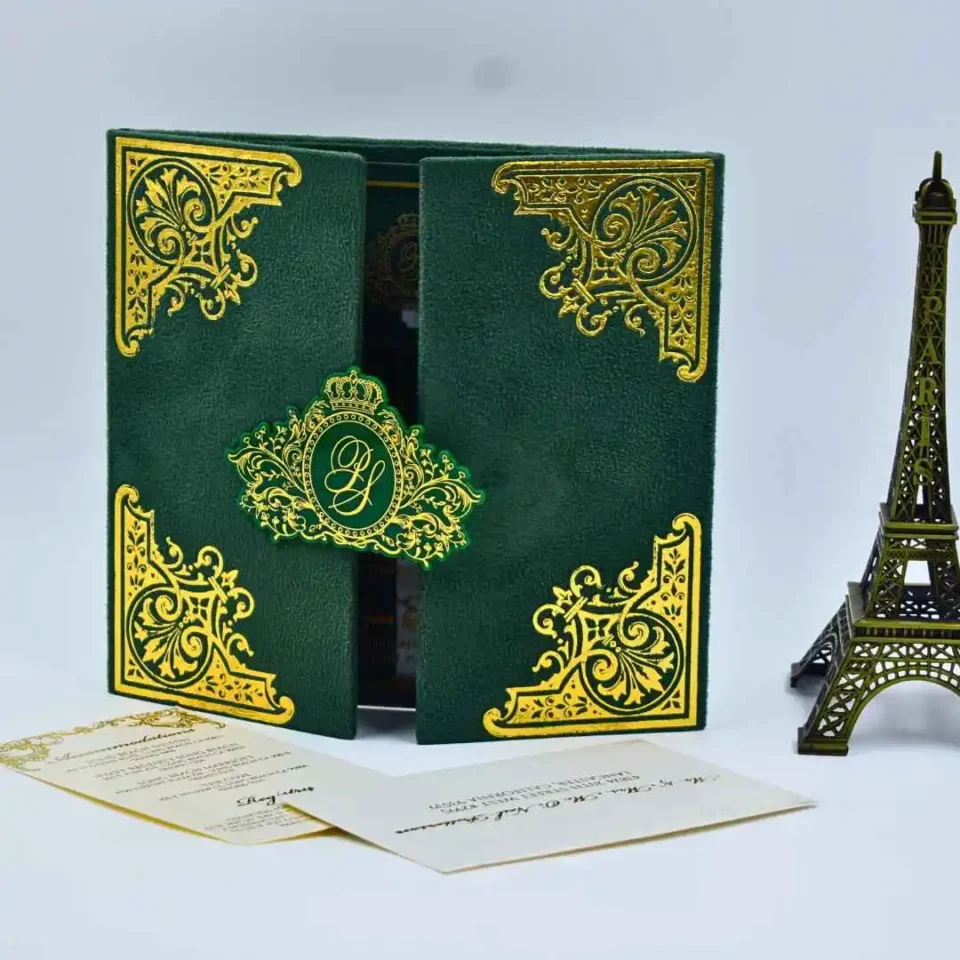
- White ink printed on dark stock (black, oxblood, deep green) for high-contrast, moody suites.
Our take: if budget is a real constraint, ask specifically about flat foil instead of traditional foil stamping. It gives you the same metallic finish without the per-die setup cost meaning more design freedom for less money, particularly on multi-color or illustrated foil designs.
4. Hand-Illustrated Florals and Botanicals
Custom, painterly illustration not stock clip art is having a real moment. Watercolor greenery (eucalyptus, olive, sage) suits softer, romantic weddings, while more graphic line-art botanicals are showing up for couples who want personality without going fully maximalist.
The detail that actually matters here: ask whether the illustrations are licensed stock art or original work. Original illustration costs more, but it also means your invitation won’t be one of a dozen others using the same eucalyptus sprig this season which, if you’re paying for “custom,” is the whole point.
5. Editorial Minimalism (“Quiet Luxury”)
Clean white space, confident serif or sans-serif typography, and almost no decoration. This is the look for couples who want their invitation to feel expensive through restraint, not embellishment.
The catch: when a design has this little going on, the paper stock and print quality carry the entire impression. A minimalist suite on flimsy stock looks cheap; the same design on a heavy, soft-touch cotton paper looks like it cost three times as much. If you’re going minimalist, put your budget into the paper, not the printing.
6. Specialty Paper Stocks as the Design Itself
Texture is doing as much work as imagery this year. Deckled (hand-torn) edges, embossed surfaces, vellum overlays, and heavy cotton stocks are being chosen specifically for how they feel in hand, not just how they look in a flat-lay photo.
A few stocks worth knowing the difference between:
| Stock | Feel | Best Paired With |
|---|---|---|
| Cotton (300–600gsm) | Soft, substantial, takes letterpress beautifully | Letterpress, deckled edges |
| Vellum | Translucent, delicate | Belly bands, overlays, layered details |
| Pearlescent | Subtle shimmer | Minimalist or metallic foil designs |
| Kraft/recycled | Warm, slightly textured, eco-friendly | Rustic, casual, or sustainable-themed suites |
| Matte/premium smooth | Clean, even surface | Typography-led, editorial designs |
If you can, order a sample pack before committing. Paper that looks identical in a product photo can feel completely different once it’s actually in your hand this is the one trend on this list where touching it yourself genuinely changes the decision.
7. Sustainable and Eco-Friendly Materials
Recycled cotton paper, handmade paper, plantable seed paper, and soy-based inks are no longer the “budget” or “compromise” choice they’re being chosen by couples who specifically want them, luxury weddings included.
Seed paper is the standout trend within this category: guests can plant the invitation itself, and it grows into wildflowers. It’s a small detail that tends to get more genuine guest reaction than almost anything else on this list.
Worth knowing: eco-friendly doesn’t have to mean a smaller design budget. Recycled cotton and kraft stocks pair beautifully with foil and letterpress, so you don’t have to choose between sustainability and a premium finish.
8. QR Code RSVPs
This is the most purely practical trend in the list, and arguably the one with the best return on a small investment. A printed QR code on your invitation or RSVP card can send guests straight to:
- An instant RSVP form
- Venue directions
- Your wedding website
- The day-of schedule
- A personal video message from you
The benefit is real and measurable: faster RSVP turnaround, fewer “did they get it?” follow-up texts, and a guest list you can actually track in real time instead of guessing from returned envelopes.
The trade-off nobody mentions: not every guest particularly some older relatives is equally comfortable scanning a code. If your guest list spans generations, keep a traditional mail-back RSVP card as a backup option rather than going QR-only. A hybrid system gets you the convenience without losing anyone.
9. Bold, Moody Color Palettes
Pastels aren’t gone, but they’re sharing the spotlight with richer, more saturated palettes: emerald, terracotta, olive, midnight teal, burgundy, and warm metallics like champagne gold. The shift reflects a broader move toward invitations that feel like a couple’s choice rather than the season’s trending neutral.
One genuinely useful technique gaining traction: printing on a colored paper stock itself, rather than printing colored ink on white paper. White ink on a deep oxblood or matte black card reads completely differently and more intentionally than the same color used only as an accent.
10. Elevated Envelopes
The envelope used to be the part nobody thought about. In 2026, it’s doing real design work: colored envelopes (rust, sage, deep green, blush), wax seals, printed liners, and even hand-illustrated motifs on the outside.
This is the easiest, lowest-cost upgrade on this entire list. Swapping a white envelope for a colored one, or adding a $1–2 wax seal, changes the entire unboxing impression for a fraction of what most other trends here cost and it’s the detail most likely to make a guest pause before opening.
11. Multi-Event Invitation Suites
For weddings with multiple celebrations engagement, mehendi, sangeet, ceremony, reception couples are moving away from a single all-purpose card toward a coordinated suite with a separate, clearly designed insert for each event.
This isn’t just aesthetic. For multi-day or multicultural weddings, a well-organized suite genuinely reduces guest confusion about which events they’re invited to and when something a single overcrowded card struggles to communicate clearly. Budget extra lead time here (8–10 weeks), since multi-piece suites take longer to design and proof than a single card.
12. Hybrid Print + Digital Systems
Few couples are choosing paper or digital anymore most are blending both. A printed keepsake suite handles the emotional, physical impression; a wedding website and digital RSVP system handle the logistics.
This is less a “trend” than it is simply the smart default for 2026: guests still want something tangible to hold, but almost nobody wants to mail back a paper RSVP card in 2026. If you’re planning your stationery, design the print piece and the digital RSVP flow together from the start, rather than bolting a QR code onto a design that wasn’t built around it.
How to Choose What’s Actually Right for Your Wedding
Not every trend belongs at every wedding, and chasing all twelve will blow both your budget and your timeline. A few honest filters:
- If your venue is doing the visual heavy lifting (a beautiful old church, a dramatic landscape), lean toward editorial minimalism and let the stock and typography carry the design.
- If your wedding spans multiple events or cultures, prioritize the multi-event suite structure before worrying about which trend looks best on Pinterest.
- If your guest list is large or spread across generations, build in the QR code convenience but keep a paper RSVP fallback.
- If your budget is tight, spend it on paper stock and envelope details (Trends 6 and 10) before specialty printing they have the highest visual impact per dollar.
- If you’re shipping internationally or choosing acrylic, add two to three weeks of buffer time you wouldn’t otherwise need.
Suggested Timeline
| Stage | Local Wedding | Destination Wedding |
|---|---|---|
| Send save-the-dates | 6–8 months before | 8–12 months before |
| Order/finalize invitations | 10–12 weeks before | 14–16 weeks before |
| Mail invitations | 8 weeks before | 10–12 weeks before |
| RSVP deadline | 4 weeks before | 6 weeks before |
Frequently Asked Questions
What’s the most cost-effective wedding invitation trend for 2026?
Elevated envelope details (colored envelopes, wax seals) and specialty paper stock give the highest visual impact for the lowest added cost both can upgrade a simple design without touching the print method.
Is acrylic worth the extra cost?
If a modern, durable, photo-ready invitation matters to you, yes but budget for higher shipping costs and a longer production timeline (8–10 weeks instead of 4–6) since each piece is custom cut.
Are QR code RSVPs a good idea for an older guest list?
They work well as a convenience for guests comfortable with smartphones, but we recommend pairing them with a traditional mail-back RSVP option if your guest list spans multiple generations.
What’s the difference between foil stamping and flat foil printing?
Foil stamping uses a heated metal die pressed into the paper for a debossed, artisan feel, but requires a custom die per design. Flat foil is a digital foiling process that skips the die, making multi-color and illustrated foil designs more affordable and faster to produce.
How far in advance should I order wedding invitations?
For a local wedding, order 10–12 weeks before your date and mail 8 weeks out. For a destination wedding, add 4–6 weeks to each step to account for international shipping and longer RSVP windows.
Can I combine sustainable materials with a luxury finish?
Yes recycled cotton and kraft stocks pair well with foil stamping and letterpress, so sustainability doesn’t have to mean a simpler design.
Whatever direction you choose, the best invitation trend is the one that actually feels like you not the one with the most likes this week. If you’d like help narrowing these down for your specific wedding, timeline, and budget, reach out to our design team we’ll walk you through stock samples, pricing, and a realistic timeline before you commit to anything.
