
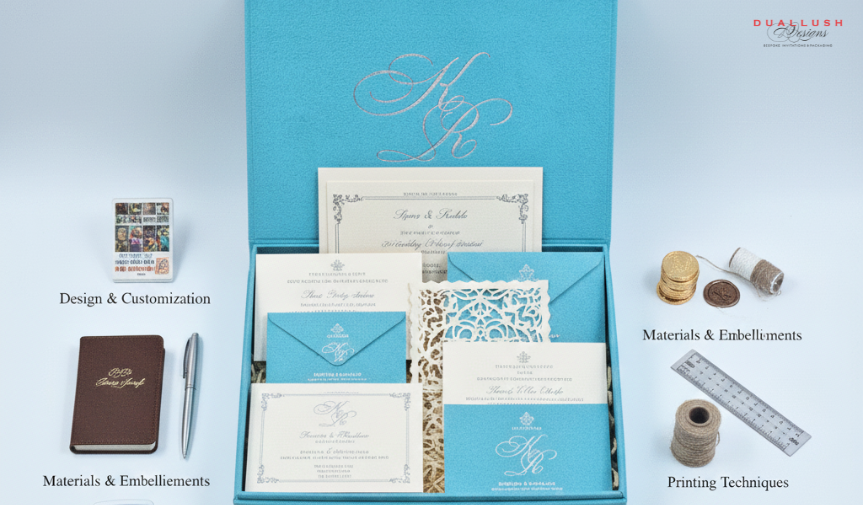
When you begin planning your wedding, you quickly realize that your invitations do much more than share details. They set the tone. They create anticipation. They give your guests a glimpse into the kind of celebration you’re planning.
And when you choose custom or luxury wedding invitations, you’re investing in craftsmanship, creativity, and keepsake-worthy stationery. But what exactly goes into the cost? And how do you plan a realistic budget?
Here’s a guide to help you understand the factors, estimate your potential expenses, and make informed choices without compromising on the beauty and elegance you desire.
Why Custom Wedding Invitations Cost More
Custom invitations aren’t mass-produced or pulled from a template. They are designed and crafted specifically for you, based on your unique style, culture, vision, and story. Every element, from the paper to the printing method, is intentionally chosen.
So while the cost of the luxury wedding invitations may feel higher than standard invites, what you’re really investing in is:
- design expertise
- premium materials
- artisanal printing
- high-touch craftsmanship
- personalized details
- time and skill
Let’s break down what contributes to the final price.
1. Design & Creative Work
This is often one of the biggest components of a custom invitation budget.
When you work with a designer, they spend time understanding your theme, colours, traditions, and preferences. They may create:
- Custom illustrations
- A monogram
- Motif inspired by your heritage
- Hand-drawn artwork
- Personalized layout and typography
Some couples choose a semi-custom design (a pre-designed template with personalization), while others opt for a fully bespoke suite. The more unique the design, the more time it requires, and the higher the creative fee.
2. Paper & Materials
The material you choose influences both look and cost. Common luxury wedding invitation materials include:
- Handmade paper
- Cotton or textured cardstock
- Vellum layers
- Acrylic sheets
- Suede or velvet covers
- Metallic or pearlescent cards
- Deckle-edge paper
- Recycled artisanal paper
Acrylic, velvet, and thick cotton stocks generally cost more. Handmade papers add premium value because they are crafted individually and often feature beautiful natural textures.
If you want a more extravagant touch, like laser-cut folios, invitation boxes, or fabric wraps, your costs increase accordingly.
3. Print Techniques
Printing is where luxury wedding invitations truly shine. Here are popular methods and how they impact cost:
Digital Printing
The most budget-friendly. It is good for bold colours and modern designs.
Foil Stamping
Adds metallic shine (gold, rose gold, silver, champagne). It requires custom metal plates and more labor.
Letterpress
Presses the design into the paper, creating a deep, tactile impression. It looks incredibly elegant, but it costs more due to the plate setup and manual operation.
Embossing / Debossing
Creates raised or recessed textures. It is ideal for monograms and motifs.
Thermography
Produces a raised ink effect. It is less expensive than letterpress but still luxurious.
Screen Printing
It is specifically designed for thicker materials, such as acrylic.
Each technique varies in price, and combining multiple methods (such as foil and letterpress) significantly increases the cost.
4. Quantity
Your guest count plays a major role in your total budget. Remember, you’re ordering per household, not per guest. If you’re inviting 250 guests, you may only need 120–150 invitation suites.
Generally:
- Higher quantities = lower cost per piece
- Lower quantities = higher cost per piece (because setup fees remain the same)
Ordering extras is always smart. Mistakes, last-minute invites, or keepsakes might add up at the end.
5. Inserts & Suite Components
A full invitation suite may include:
- Main invitation
- RSVP card
- Details card
- Itinerary insert
- Venue map
- Gift/registry insert
- Envelope liner
- Secondary envelope
- Wax seal
- Belly band
- Pockets or folios
- Sleeves or jackets
Each additional card or accessory contributes to your per-invite cost.
If you’re trying to stay within a certain budget, consolidating information (for example, combining details and RSVP instructions on one card) can make a big difference.
6. Envelopes, Packaging & Finishes
Luxury wedding invitations often stand out because of beautiful finishing touches, such as:
- Custom envelopes
- Envelope liners
- Calligraphy addressing
- Wax seals
- Ribbon wraps
- Tassels
- Metallic edge painting
- Gold or coloured corners
- Velvet or acrylic boxes
- Laser-cut folios
These details not only elevate the experience but also add to the cost, sometimes more than the card itself.
7. Shipping, Postage & Handling
If your invitations are heavy, include multiple inserts, or come in a box, postage costs increase.
Some luxurious suites require:
- Extra postage
- Protection packaging
- Courier services for delicate materials
- International shipping
While this isn’t a design cost, it’s an important part of your total budget.
How Much Should You Budget?
You’ll find custom wedding invitations in a wide range, depending on:
- Level of customization
- Materials chosen
- Number of components
- Printing techniques
- Quantity
Here’s a simplified guideline:
Essentials Luxury Tier
Premium cardstock, digital print, with one or two inserts
- Best for: Minimalist weddings
- Budget: Moderate per-invite pricing
Premium Bespoke Tier
Custom motifs or artwork, foil stamping, envelope liners with multiple inserts
- Best for: Classic or culturally inspired weddings
- Budget: Higher per-invite pricing
Ultra-Luxury Tier
Acrylic or velvet invitations, keepsake boxes, multiple techniques, and laser-cut detailing with premium packaging
- Best for: High-end weddings, destination weddings, or couples who want a statement piece
- Budget: Highest per-invite investment
These tiers aren’t fixed. They simply there to help you understand what drives pricing and how to allocate your budget accordingly.
How to Save Without Losing the Luxe Feel
If you want elegance without stretching too far, try:
- Choosing digital print with one premium upgrade (like a foil monogram)
- Using fewer inserts
- Selecting a beautiful envelope liner instead of a full folio
- Opting for a semi-custom design
- Keeping your invitation size standard
- Limiting multiple print techniques
- Ordering early to avoid rush fees
You can absolutely achieve luxury without going all-in. Strategy is everything when it comes to getting your picture-perfect wedding invitations.
Conclusion
A custom wedding invitation is more than stationery. It’s a preview of your celebration and a keepsake your loved ones cherish. Understanding the cost breakdown helps you make informed choices, prioritize what matters to you, and create a suite that feels personal, thoughtful, and beautifully aligned with your wedding vision.
If you’re looking for invitations that blend tradition, culture, artistry, and contemporary design, Duallush Designs specializes in crafting bespoke, couture-level stationery with exceptional attention to detail. Whether you prefer a minimalist, regal, modern, or deeply cultural aesthetic, you can create a luxury experience that suits your style and budget.
FAQs (Frequently Asked Questions)
1. Why are custom wedding invitations more expensive than standard invitations?
Custom wedding invitations are designed specifically for each couple and are not mass-produced. The cost includes design expertise, premium materials, specialized printing techniques, and detailed craftsmanship, making them more personal and keepsake-worthy.
2. What factors affect the cost of luxury wedding invitations the most?
The biggest cost drivers are custom design work, choice of materials, printing techniques, quantity ordered, number of inserts, packaging details, and shipping or postage requirements.
3. How much should I budget for custom or luxury wedding invitations?
Budgets vary widely. Minimalist luxury invitations typically cost less, while fully bespoke suites with premium materials like acrylic, velvet, foil stamping, and boxes require a higher per-invite investment. Your final cost depends on customization level and guest count.
4. What materials make wedding invitations feel luxurious?
Luxury wedding invitations often use handmade paper, cotton cardstock, vellum, acrylic, velvet, suede, metallic finishes, or deckle-edge paper. These materials add texture, weight, and visual depth.
5. Which printing techniques are considered premium for wedding invitations?
Popular luxury techniques include foil stamping, letterpress, embossing, debossing, thermography, and screen printing. Each adds dimension and elegance but increases cost compared to digital printing.
6. How many wedding invitations should I order?
You should order invitations per household, not per guest. It’s also recommended to order 10–15% extra for last-minute invites, errors, or keepsakes.
7. Do inserts and accessories significantly increase invitation costs?
Yes. RSVP cards, detail cards, envelope liners, wax seals, ribbons, and invitation boxes all add to the per-invite cost. Reducing inserts or combining information can help manage your budget.
8. Are boxed wedding invitations worth the extra cost?
Boxed wedding invitations offer protection, presentation, and keepsake value. They are ideal for luxury, destination, or culturally significant weddings where first impressions matter.
9. How can couples save money without compromising on luxury?
You can maintain a luxe look by choosing digital printing with one premium element, using fewer inserts, selecting semi-custom designs, sticking to standard sizes, and ordering early to avoid rush fees.
10. When should I start planning my wedding invitations to control costs?
Start planning 8–10 months before your wedding. Early planning allows better design flexibility, avoids rush fees, and gives you time to review samples and proofs calmly.
