
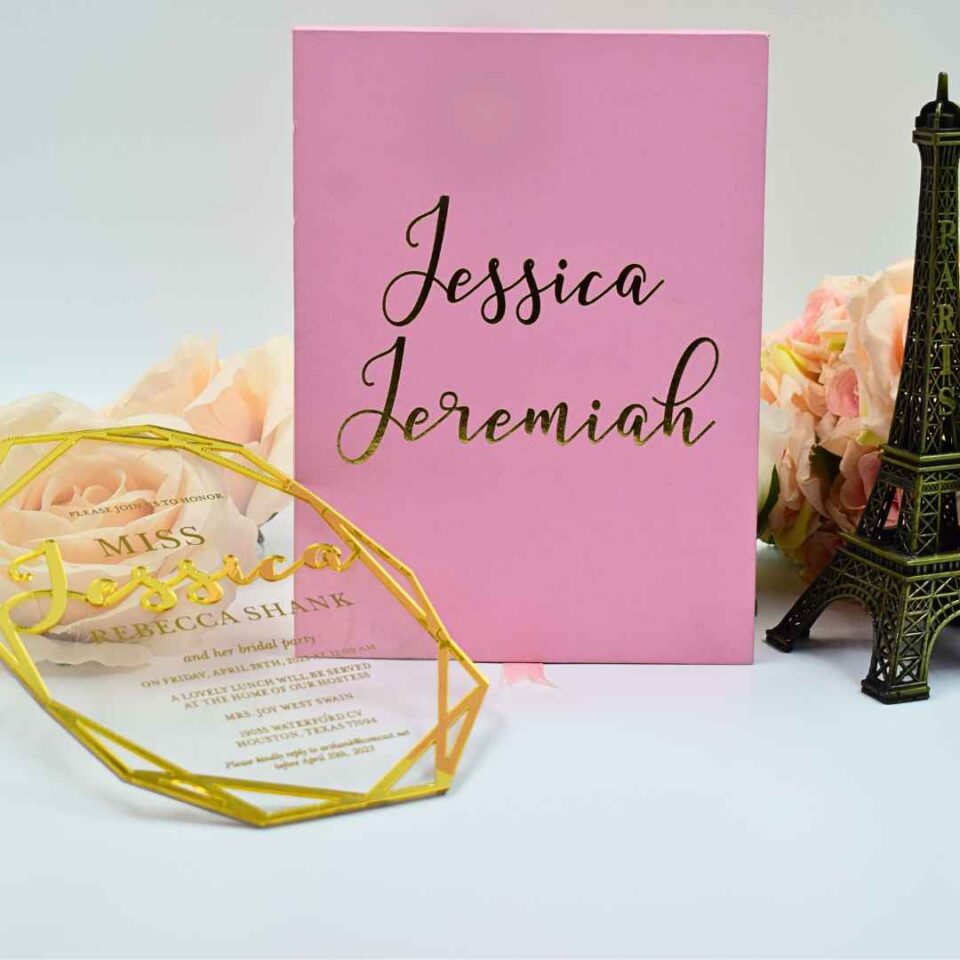
Four letters, one French phrase, and an outsized effect on how smoothly your wedding day runs. Here’s what’s really going on behind that small line on the card.
Most people have seen the letters RSVP enough times that they stop noticing them. They sit quietly at the bottom of a wedding invitation, easy to skim past on the way to checking the date and the dress code. But ask someone what the letters actually stand for, or why a couple cares so much about getting that response back by a certain date, and the answer gets fuzzy fast.
That gap matters more than it seems. RSVP isn’t decorative wording left over from old etiquette books. It’s the mechanism that turns a guest list into a working headcount the number every caterer, florist, and venue coordinator is waiting on before they can finalize anything.
Where the Term Comes From
RSVP is borrowed directly from French: répondez s’il vous plaît, which translates to “please respond.” English-language invitations adopted the abbreviation wholesale, the same way menus kept “à la carte” or condolence cards kept “in memoriam.” It never got translated because, frankly, four letters do the job better than a full sentence would.
On a wedding invitation, the request is simple: let the couple know whether you’re coming. But simple requests can still carry a lot of operational weight, which is really what this guide is about.
Why Couples Build an Entire Process Around Four Letters
Picture the planning side of a wedding for a moment. A caterer needs a final plate count roughly two weeks out. A venue needs to know whether they’re setting up for 80 chairs or 150. A calligrapher assigning table cards can’t start until the list of confirmed names stops changing. Every one of those tasks depends on the same input: who said yes.
Without that information, couples are left guessing, and guessing in wedding planning is expensive. Order too much food and you’ve wasted money. Order too little and you’ve got hungry guests and an awkward story for years to come. The RSVP is what replaces that guesswork with an actual number.
Here’s where that number actually gets used:
Catering per-plate costs are calculated directly from confirmed attendance, so this is usually the single biggest line item RSVP affects.
Seating charts can’t be finalized, especially for assigned seating, until the couple knows exactly who’s in the room.
Budget favors, transportation, and accommodation bookings all scale with guest count.
Multi-day events for weddings with a mehendi, sangeet, or after-party, RSVP often needs to specify which functions a guest plans to attend, not just the main event.
What a Couple Is Actually Asking For
A wedding RSVP request usually comes with more structure than the word itself suggests. Depending on the formality of the wedding, guests might be asked for:
Guest name confirms exactly who’s responding, especially on shared invitations Attendance is the core yes-or-no; the whole process exists for the response deadline, which gives the couple a hard cutoff to finalize numbers Meal choice is common at plated dinners with more than one entrée option Guest count clarifies whether a plus-one or children are included Contact details gives guests a way to respond, and the couple a way to follow up
Larger or more formal weddings sometimes go a step further, asking about accommodation needs, transportation to the venue, or dietary restrictions details that matter more once the guest list crosses into the hundreds or spans multiple countries.
Two Ways to Collect an RSVP and Why Couples Increasingly Use Both
For most of wedding history, there was really only one option: a small printed card tucked inside the invitation, filled out by hand, and mailed back. That format hasn’t disappeared; it’s still the standard for formal and traditional weddings, partly because nothing else feels quite as considered when you’re holding it.
The tradeoffs are fairly well known by now. Printed cards add to both the printing bill and the postage bill, and the whole loop card goes out, sits on someone’s counter, eventually gets mailed back, takes time that a busy guest doesn’t always prioritise.
Digital RSVP has filled that gap. Wedding websites, simple online forms, and direct messages through email or WhatsApp let guests respond in the time it takes to read the invitation. For destination weddings or guest lists scattered across time zones, that speed difference isn’t a minor convenience; it’s often the reason the couple can lock in numbers at all.
The QR Code Shift
The newest layer on top of digital RSVPs is the QR code, now printed directly on a growing share of invitations. A guest opens their camera, scans the code, and lands straight on an RSVP form or wedding website, no typing a URL, no searching for an email. It’s a small design choice, but it removes nearly every point of friction between “I got the invitation” and “I responded.”
This format has been picking up steam for several years now, and current signs point to it becoming close to standard on mid-to-large weddings going forward, particularly among couples who want the formality of a printed card paired with the speed of a digital response.
The format guests respond on rarely affects whether they show up. What changes is how quickly the couple finds out and that speed is what good planning actually runs on.
How Traditional and Digital RSVP Actually Compare
In terms of feel, traditional cards read as formal and classic, while digital and QR methods feel modern and convenient. On cost, traditional involves printing and postage, while digital is minimal. Traditional responses are slower, dependent on the mail, while digital is near-instant. Environmentally, paper-heavy traditional cards have a bigger footprint than digital. And in terms of guest effort, traditional asks someone to write, stamp, and mail a card, while digital just asks them to tap and type.
Plenty of couples now split the difference: a printed card for the formality, with a QR code or website link printed right alongside it so guests can choose whichever method actually gets used.
If You’re the One Being Asked to RSVP
Good etiquette here isn’t complicated, but it’s easy to let slide when life gets busy. Responding before the deadline matters more than people realize, since the couple is often making final catering and seating decisions the moment that date passes. Once you’ve responded, try to treat it as final flipping from a “yes” to a “no” (or the reverse) a week before the wedding creates real problems on the other end, even if it doesn’t feel that way from the guest side.
If the invitation asks for a meal choice or mentions dietary restrictions, answer that part honestly and on the same response it saves an awkward follow-up message later. And whichever way you’re responding, a brief, polite note goes further than people expect, especially if you’re declining.
Where Couples Tend to Go Wrong
A handful of mistakes show up again and again, and most of them are avoidable with a bit of foresight.
Setting the deadline too close to the wedding. A deadline two weeks out doesn’t leave enough runway to chase down stragglers, finalize a seating chart, and still get that number to the caterer on time. Three to four weeks before the wedding is the range most planners recommend, and destination weddings often need even more lead time given how far in advance guests have to book travel.
Overcomplicating the response process. A long form with a dozen fields will get ignored by busy guests. The better approach is a short, clear ask name, attendance, maybe one or two follow-up questions with an obvious way to submit it.
Leaving out contact details. It sounds obvious, but invitations occasionally go out without a clear phone number, email, or link, leaving guests unsure how they’re even supposed to respond.
Never following up. Some guests genuinely forget. A gentle reminder a week or two before the deadline sent without judgment tends to recover a meaningful chunk of missing responses, and it’s far less awkward than chasing names down personally the week of the wedding.
Wording That Works
RSVP wording doesn’t need to be clever, just clear. Traditional invitations tend to keep it formal and direct something along the lines of asking guests to respond by a specific date. Modern invitations, especially ones built around a QR code or wedding website, often simplify it even further, pointing guests straight to where the response actually happens.
Whichever direction a couple chooses, the wording that performs best is almost always the plainest. Clarity gets a response. Cleverness, more often than not, just adds a beat of confusion before the guest figures out what to actually do.
A Rough Timeline That Tends to Work
Invitations typically go out six to eight weeks before the wedding. The RSVP deadline usually sits three to four weeks before. And the final headcount gets locked in one to two weeks before the big day.
Destination weddings generally need to shift this whole timeline earlier, since guests are juggling flights and time off, not just a date on a calendar.
Where This Is All Heading
The wedding industry hasn’t abandoned the printed RSVP card, and it probably won’t anytime soon there’s a reason formal weddings still lean on it. But the practical center of gravity has shifted toward digital tools: wedding websites that double as a guest hub, QR codes that collapse the whole response process into one scan, and tracking systems that let couples see, in real time, who’s confirmed and who’s still pending.
The luxury end of the market has landed somewhere in between, often pairing a beautifully printed invitation suite with a digital RSVP layer underneath it keeping the ceremony of paper while borrowing the speed of a screen.
However a couple ends up collecting responses, the underlying goal hasn’t changed since the phrase was first borrowed from French: make it easy for guests to say yes or no, and easy for the couple to know where they stand. Everything else the seating chart, the catering order, the final headcount depends on getting that one small step right.
