
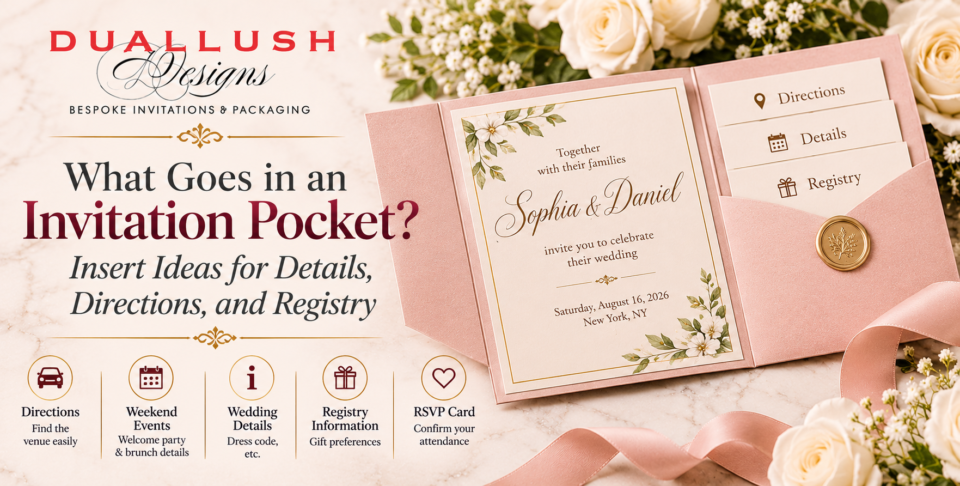
A pocket invitation gives you room that a flat card never will. Instead of squeezing the date, directions, hotel information, and RSVP onto one piece of paper, you can give each topic its own insert and keep everything together. The harder question is deciding what actually belongs in the pocket. Here is what to include in an invitation pocket, from the details card to directions and registry information, and how to keep the suite useful rather than crowded.
The Essentials: RSVP and Details Cards
Most pocket suites start with two inserts.
RSVP card. Include a reply-by date, a line for guest names, and options to accept or decline. If you are offering a choice of entrées, list them and leave space for dietary restrictions. A pre-addressed, stamped return envelope makes replying easy, and a website RSVP works just as well if you tell guests clearly where to go. Many couples set the deadline three to four weeks before the wedding, which leaves time to give the caterer a final count.
Details card. This is the home for information that does not fit the formal invitation wording: dress code, reception location if it differs from the ceremony, start times, whether children are invited, and notes about outdoor ceremonies or accessibility. Stick to the questions guests will actually ask.
Directions and Travel Inserts
Most guests rely on a phone for navigation, so long turn-by-turn directions rarely help. A directions card earns its place when the venue is hard to find or guests need to park somewhere unexpected.
- Address and parking: Give the full street address, where to park, and whether the GPS pin tends to send people to the wrong entrance.
- Transportation: Note shuttle pickup times, rideshare drop-off points, and the nearest airport with an approximate drive time.
- Accommodations: List hotel names, room block cutoff dates, and booking codes, plus how far each is from the venue.
- Map: A simple illustrated map suits destination or multi-venue weddings, and it doubles as a keepsake.
If you are hosting a full weekend, a one-page schedule covering the welcome dinner, ceremony, and farewell brunch can replace several separate cards.
How to Handle Registry Information
Traditional etiquette says gift information does not belong in the invitation itself, and a card that reads like a shopping list can feel out of place in a formal suite. A common approach in the US is a small wedding website card instead. Put the web address on one insert, then share your registry, travel details, and updates on the site.
This works well in practice. You can change registry links or hotel availability after the invitations are mailed, and guests who want to send a gift know exactly where to look. A short URL is enough, and a QR code can sit beside it if you like. If you have a honeymoon fund or a charitable preference, the website is also the right place to explain it.
Optional Inserts Worth Considering
- A reception card, when the ceremony and reception differ in location or time.
- A song request line, added to the RSVP card rather than printed as a separate piece.
- A short note about an unplugged ceremony or a no-gift request.
- Childcare or babysitter information for out-of-town families.
Not every wedding needs all of these. Three to five inserts is usually enough, and more than that can feel overwhelming to open. Whichever you choose, check that dates, times, and spellings match across every card.
Choosing the Right Pocket for Your Suite
Count your inserts before you pick a format. A set of invitation pockets works well for a streamlined suite with a few standard-size cards. If you have many pieces to organize, a folio invitation design may offer more room for them. Your main wedding invitation should still lead the suite, with its wording and design setting the tone for everything tucked behind it. Before ordering, measure your largest insert against the pocket opening so nothing has to be trimmed or crammed.
Assembly and Mailing Tips
- Stack inserts with the largest at the back and the smallest in front, so each card is easy to pull out.
- Mail invitations six to eight weeks before the wedding, or eight to twelve weeks ahead for destination weddings.
- Weigh one fully assembled suite at the post office before buying stamps. Thick cards, embellishments, and rigid materials can raise postage.
- For a more protective and polished presentation, consider a wedding invitation box for the finished suite.
Final Thoughts
A good invitation pocket answers guests’ questions before they ask: when to reply, where to go, where to stay, and where to find gift information. Choose only the inserts your wedding needs, keep the wording clear, and let the pocket do the organizing.
When you are ready to build your suite, explore Duallush’s collection to find a pocket style that fits your inserts and your wedding’s look.